
The Belcourt Theater in Nashville and the Museum of Fine Arts, Houston will present Kurosawa retrospectives in August 2025.
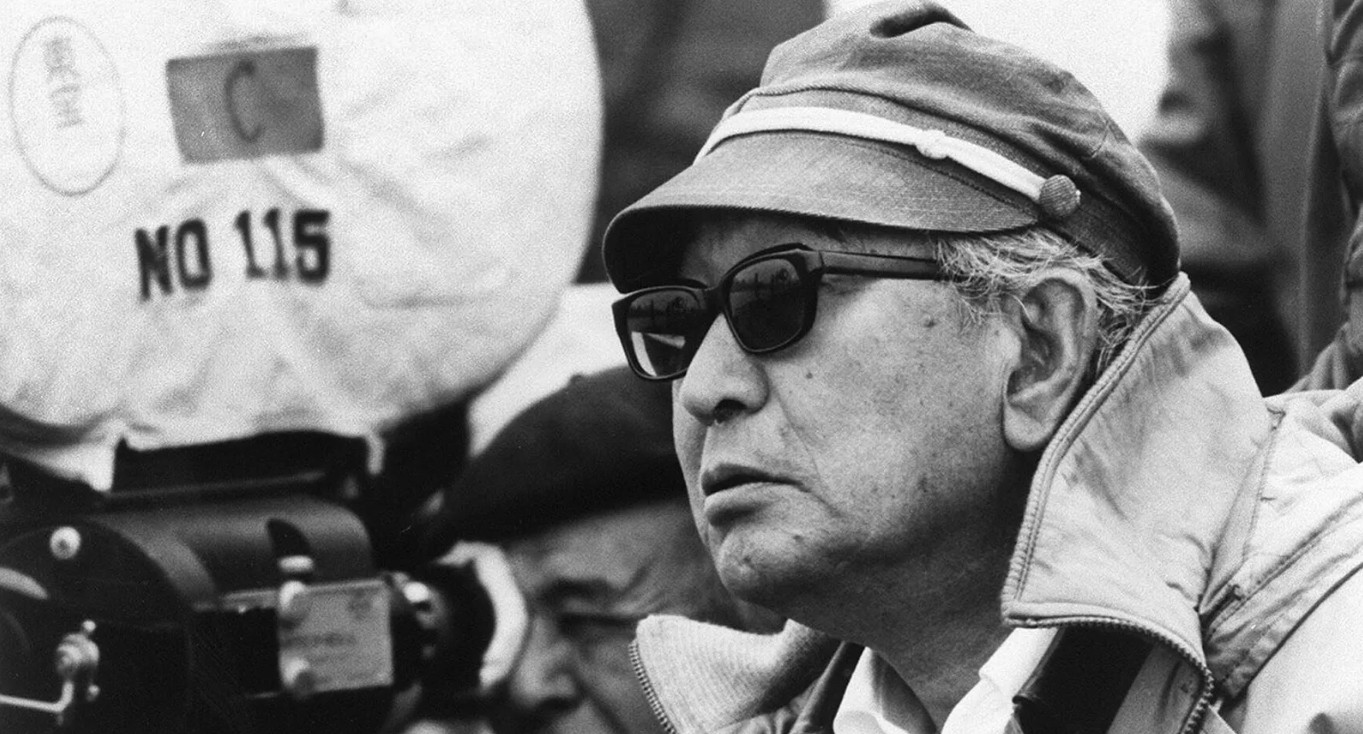
Throughout much of his life in his native Japan, Akira Kurosawa was greeted as “Sensei” – “Master,” a title of affection and respect — by admirers and collaborators. Just as often, however, he was spoken of as “Tenno” – “emperor” — by critics and detractors who mocked what they viewed as his aloof and aristocratic manner. His name became a kind of shorthand for the jidai-geki (period costume films) that most Westerners viewed as most emblematic of Japanese cinema. But many of his finest efforts were 20th-century stories that did not showcase a single samurai.
Reveling in his own contradictions, Kurosawa fully appreciated the extreme responses he inspired as a living legend. In 1984, when he was ready to direct a storm sequence for Ran — arguably, his last incontestable masterpiece — Mother Nature obligingly provided a special effect. Almost precisely on cue, a typhoon struck the shooting location in Kyushu. Later, Kurosawa joked: “In Japan, journalists often call me ‘emperor’ because they think I’m so tyrannical. Well, I guess I can now command even the elements.”
On other occasions, however, Kurosawa lived down to expectations by behaving very much like the authoritarian autocrat he was rumored to be. Indeed, he was so demanding a taskmaster that even Toshiro Mifune, who starred in many of Kurosawa’s greatest films, refused to ever again work with the emperor after the completion of Red Beard (1965).
Kurosawa made no apologies for embracing the style and substance of “foreigners” as diverse as John Ford and Vincent Van Gogh.
Read the final page of Something Like an Autobiography, Kurosawa’s acclaimed 1982 memoir, and you find a self-portrait of the artist as a harshly judgmental know-it-all: “I am often asked why I don’t pass on to young people what I have accomplished over the years. Actually, I would like very much to do so. Ninety-nine percent of those who worked as my assistant directors have now become directors in their own right. But I don’t think any of them took the trouble to learn the most important things.”
Kurosawa obviously fared better as a mentor with his pupils who knew the artist almost exclusively through his art. George Lucas — who freely quoted Kurosawa’s The Hidden Fortress in Star Wars — spoke for dozens of his contemporaries when he praised the emperor as “one of the true masters of his art.” Steven Spielberg went ever further, hailing Kurosawa as “the visual Shakespeare of our time,” a magnificent artist “who right until the end of his life continued to make films that were recognized, or will be recognized, as classics.”
At the time of his death last September in 1998 at age 88, Akira Kurosawa was eulogized as one of the century’s greatest and most influential filmmakers, as the director who single-handedly brought Japanese cinema to the world’s attention with such early masterworks as Rashomon (1950), Ikiru (1952) and Seven Samurai (1954). Tokyo film critic Yoshio Shirai only half-jokingly noted: “Before Rashomon, the outside world’s image of Japan was Mount Fuji, geisha girls and cherry blossoms. After the movie, it changed to Kurosawa, Sony and Honda — in that order.”
Even so, Kurosawa’s international reputation did not always sit well with many of his countrymen. As early as 1951, when Rashomon earned the grand prize at the Venice Film Festival and an Academy Award for Best Foreign Language Film, some members of the Japanese film community dismissed these unprecedented honors as “simply reflections of Westerners’ curiosity and taste for Oriental exoticism.” Later, as his fame and influence spread across the world, Kurosawa found himself saddled with the dubious honor of being praised — and damned — as the “most Western” of Japanese filmmakers.
Well into the late 1980s, the emperor remained enough of a superstar to command substantial sums for appearing in TV commercials for whiskey and home electronics. And yet journalist Ian Buruma insisted in a 1989 New York Times Sunday Magazine profile that Kurosawa was admired more abroad than at home. “Younger (Japanese) critics tend to regard him as an anachronism,” Buruma wrote. “His humanistic concerns and worship of classical art seem out of place in post-modern Tokyo.”
Kurosawa made no apologies for embracing the style and substance of “foreigners” as diverse as John Ford and Vincent Van Gogh. (The latter appeared as a workaholic sage — played by Martin Scorsese, no less! — in Akira Kurosawa’s Dreams.) He filmed Dostoyevsky’s The Idiot as a contemporary drama set in the snow-country of Hokkaido, and transferred Gorky’s The Lower Depths to the slums of Edo-period Tokyo. At the same time, though, Kurosawa remained forever mindful of his roots. And while he refused to err on the side of romanticized nostalgia in his re-creations of Japan’s turbulent past, he viewed social changes, technological advancements and other breaks from tradition as extremely mixed blessings. It is well worth noting that, in Seven Samurai, the 16th-century swordsman who best represents the bushido code of honor is felled by rifle shot.
The seventh child of a military-school instructor — and, fittingly enough, a direct descendant of ancient samurai — Akira Kurosawa was born in Tokyo on March 23, 1910. He fell in love with the movies at an early age, but delayed the inevitable while dabbling in commercial art and painting as a young man. (Years later, he would create elaborately detailed storyboards for his films, many of which were displayed in major art galleries.) During his salad days, he flirted with radical leftist politics, a fact that has led many film historians, rightly or wrongly, to perceive a Marxist influence in his renderings of peasants, bandits and other fringe dwellers.
Kurosawa gate-crashed into film history in 1936. Evidencing all the brash confidence of youth, he answered a newspaper advertisement for assistant directors at the studio that would eventually become Toho Film Co. Applicants were required to submit an essay on the fundamental deficiencies of Japanese cinema. Kurosawa detailed the problems, suggested corrections — and landed a job. Right from the start, however, he was hard-pressed to accept any authority but his own. “I am short-tempered and obstinate,” he admitted in his memoir. “These defects are still pronounced, and when I was an assistant director they gave rise to some very serious problems.”
Such is the magic of cinema: A man may die, but his films remain forever in the present tense.
Almost in spite of himself, Kurosawa impressed enough of the right people, and was given the chance to direct his first feature — Sanshiro Sugata, the saga of a 19th-century judo master — in 1943. Rebelling against the restraints of wartime censorship, he emphasized the spiritual dimension of martial arts just when Japanese filmmakers were encouraged to be blatantly militaristic. (“Being young in those times,” Kurosawa recalled, “consisted of suppressing the sound of one’s breathing in the jail cell that was called the home front.”) Much to the surprise of everyone but the man who wrote and directed it, Sanshiro Sugata was a hit with critics and ticketbuyers. Almost overnight, the contentious apprentice was elevated to the rank of master craftsman.
Akira Kurosawa lived long enough to see his artistry labeled as obsolete. But his art has survived the stringent tests of time, and ensures his immortality. Such is the magic of cinema: A man may die, but his films remain forever in the present tense.
Throughout August, the Belcourt Theater in Nashville and The Museum of Fine Arts, Houston will be hosting Akira Kurosawa retrospectives. Here are some of my recommendations.
RASHOMON (1950)
(At Belcourt Theater Aug. 9, 10 and 13.)
A bandit subdues a nobleman in a secluded woodland, and forces himself on the nobleman’s beautiful wife. The nobleman dies, the wife flees, the bandit is captured — and everything else in Rashomon remains open to conjecture. Decades before The Usual Suspects warned moviegoers not to accept subjective testimony as verifiable fact, Kurosawa’s breakthrough masterpiece suggested that no eyewitness can be entirely trusted, that truth itself may be forever elusive.
Four different accounts of the crime — including one offered by the late nobleman through a court-ordered medium — are considered by three strangers stranded under the Rashomon gate by a raging thunderstorm. Was the nobleman truly a man of honor? Is his wife an innocent victim or a guilty participant? Could the bandit (Toshiro Mifune at his most swaggeringly uninhibited) be twisting the truth for a selfless reason? The possibilities are perplexing. Each testimony is dramatized in flashback, and none seems more credible than the others. Indeed, Kurosawa strongly hints that all four stories are, to varying degrees, deceptions born of self-delusion. “Human beings,” he wrote in his memoir, “are unable to be honest with themselves about themselves.”
Rashomon has spawned many imitators, including a 1964 Americanized remake, The Outrage, with Paul Newman miscast as a Mexican outlaw. But Kurosawa’s film continues to be paradigm for this sort of beguilingly simple but provocatively complex drama. Even now, the title is used to describe anything from Senate hearings to Seinfeld episodes in which a story is told from multiple — and often contradictory — points of view.
IKIRU (1952)
(At MFAH Aug. 3. At Belcourt Theater Aug. 23 and 26.)
Kurosawa once again experimented with shifting perspectives and subjective interpretations in this deeply moving drama — one of his very best — about a fusty bureaucrat (masterfully played by Takashi Shimura) who is devastated, then galvanized, when he discovers he is dying of cancer. At first, Watanabe desperately seeks the most possible pleasure in the least amount of time, through binge drinking with a sympathetic writer and an innocent flirtation with a beautiful young co-worker. Ultimately, however, he realizes that even though he has already wasted most of his life as a paper-pusher, he shouldn’t waste what’s left of it as a party animal. So Watanabe devotes his final days to establishing a neighborhood park for children.
About two-thirds of the way through Ikiru, Kurosawa jumps ahead five months, to focus on the friends and co-workers who gather for Watanabe’s all-night wake. From the flashbacks cued by their recollections — some of them contradictory, almost all of them self-serving — the audience is able to piece together something like the truth: The bureaucrat managed to triumph over his impending death, and jump-start his long-dead soul, by finding purpose through action.
Ikiru (which translates as “to live”) contains one of the most heartbreakingly eloquent images in all of Kurosawa’s cinema: After finally achieving his goal of transforming an urban wasteland into a playground, the dying Watanabe sits alone in the snow, on a swing, and softly sings a melancholy song about the evanescence of life. His own life may be complete, but so is his victory.
(By the way: Living, Oliver Hermanus’ deeply affecting 2022 remake of Kurosawa’s classic featuring deservedly Oscar-nominated Bill Nighy in the Takashi Shimura role, also is well worth your time.)
SEVEN SAMURAI (1954)
(At Belcourt Theater Aug. 23 and 25.)
Kurosawa’s stunning epic is one of those rare indispensable films that practically everyone has heard about, regardless of whether they’ve actually seen it. Indeed, even if you haven’t, you may think you’ve seen it, given its strong influence on so many other films and filmmakers. Directors ranging from John Sturges (who remade it as The Magnificent Seven) to John Sayles (who borrowed the basic plot while writing a guilty-pleasure sci-fi cheapie called Battle Beyond the Stars) have drawn from this tale of honor among warriors in 16th-century Japan.
By turns sage and savage, avuncular and authoritarian, Takashi Shimura is Kambei, an unemployed samurai who agrees to help peasants defend their village against marauding bandits. Even though the pay is meagre — a few handfuls of rice — Kambei is able to recruit other hired swords who have little else to do after being cast adrift by the lords they once served. By appealing to their pride and sense of justice, he attracts such tough customers as Kyuzo (Seiji Miyaguchi), a taciturn professional whose never wastes a word or gesture, and Kikuchiyo (Toshiro Mifune), a bearish hot-head who takes great pains to hide his less-than-noble ancestry.
Seven Samurai shows Kurosawa at the top of his form, demonstrating an absolute mastery of his medium with an inspired balance of formal precision and kinetic exuberance. His epic opens with fast pans of bandits riding over hills, and climaxes with the chaos of a rain-soaked, mud-and-blood battle. In between, there is scarcely a single shot that does not contain motion. Even when people within the frame are stationary, the camera itself glides, thrusts and recoils. More than 70 years after its initial release, Seven Samurai makes most other action movies seem positively pokey.
THE HIDDEN FORTRESS (1958)
(At MFAH Aug. 9. At Belcourt Theater Aug. 15 and 18.)
At once a straight-faced spectacle and a mischievously sly put-on, The Hidden Fortress follows a fugitive princess (Misa Uehara) and her loyal general (Toshiro Mifune) as they maneuver through enemy territory during the civil wars of the 1500s. Skillfully employing wide-screen compositions for the first time in his career, Kurosawa alternates between elaborate set pieces — a slave revolt, chases on horseback, fire-festival celebrations, hairbreadth escapes — and broadly played comic relief. Much of the latter is provided by two bickering bumpkins (Minoru Chiaki, Kamatari Fujiwara) who go along for the ride without knowing the princess’ true identity — and who greedily plot to steal the gold hidden among the firewood transported by the general.
George Lucas has made no secret of his drawing upon Hidden Fortress as an inspiration for Star Wars. The bumpkins, of course, are precursors of R2D2 and C3PO, just as the headstrong heroine — who looks like a rough draft for Lara Croft of Tomb Raider fame — is the model for the feisty Princess Leia. (It requires a bit of stretch to see Mifune’s general as Han Solo, but never mind.) Lucas learned some important lessons from the master, enabling him to create his own masterwork. But as critic David Ehrenstein reminds movie buffs in his original laser-disc liner notes, Hidden Fortress stands on its own merits as a rousing adventure set “a long time ago” in a land “far, far away.”
YOJIMBO (1961)
(At MFAH Aug. 10. At Belcourt Theater Aug. 9 and 12.)
The steely-eyed stranger rides into a lawless town where bad men rule, loyalty is bought and sold, and the coffin-maker never sleeps. With equal measures of ruthless cunning and lethal proficiency, he cuts a bloody swath through the corruption. In the end, as he prepares to ride off to another adventure, he takes a moment to appreciate his handiwork: “Now it will be quiet in this town.” No kidding: Thanks to the stranger, just about everyone who once lived there is dead.
Yojimbo, Kurosawa’s darkly comical Samurai Western, takes the hard-boiled premise of Dashiell Hammett’s novel Red Harvest — a tarnished hero encourages two rival gangs to destroy each other — and outfits it with the trappings of traditionally Japanese jidai-geki. But there is nothing traditional about the cynical tone or the sardonic humor of this gleefully savage self-parody. Sanjuro, the sword-slinging anti-hero played by Toshiro Mifune, is prepared for the worst upon his arrival, when he sees a stray dog trotting down the dusty street with a human hand in its mouth. Later, after he temporarily signs on as a yojimbo (bodyguard) for one of two warring clan leaders, he overhears the leader’s shrewish wife urging her feckless son to kill Sanjuro: “Do it from behind, and it’ll be quite easy enough!” When Sanjuro finally gets around to pitting one clan against the other, he isn’t motivated by moral outrage. Rather, he simply delights in exploiting the villainy of lesser men to produce an amusing spectacle. The one time Sanjuro performs a selfless act— he reunites an enslaved woman with her husband and young son — he pays dearly for generosity.
Yojimbo has been remade twice, with Clint Eastwood (A Fistful of Dollars) and Bruce Willis (Last Man Standing) filling in for Mifune as the impassive protagonist. But even though each of the recyclings has something to recommend, the original remains in a class by itself as an exuberantly misanthropic masterpiece.
HIGH AND LOW (1963)
(At MFAH Aug. 24. At Belcourt Theater Aug. 8, 10 and 17)
After finding inspiration in the classics of Shakespeare and Dostoyevsky, Kurosawa turned to a decidedly more contemporary source: King’s Ransom, Ed McBain’s 87th Precinct thriller about the kidnapping of a Manhattan businessman’s young son. With the aid of three co-screenwriters, Kurosawa transferred the story to Japan, and infused it with his vision of a modern society undermined by the erosion of traditional values. But even while the film can be appreciated as an absorbing morality play, High and Low also can be enjoyed as a first-rate, noir-flavored police procedural.
The astoundingly versatile Toshiro Mifune is Kingo Gondo, a lordly shoe-company executive who mortgages everything he owns to launch a hostile takeover of his own firm. Pride, not greed, his motive— he’s determined to defeat rival board members who want to produce cheaper shoes for higher profits. But before he can complete his risky stock deal, Gondo gets a call from a stranger who claims he has kidnapped the businessman’s only son. The good news: The kidnapper mistakenly abducted the son of Gondo’s chauffeur. The bad news: He demands a 30-million-yen ransom anyway. “You’re a fool to pay,” he cruelly taunts the bound-by-honor Gondo. “But you will.” And he’s right.
Kurosawa skillfully intensifies the tension inside Gondo’s lavishly-appointed mansion by evoking a sense of claustrophobia. Some individual widescreen shots are framed so that even while other characters — policemen, the anxious chauffeur, Gondo’s loyal wife — circle the businessman, he remains apart in the terrible isolation of his moral dilemma. When Gondo finally leaves his home to deliver the ransom, the movie switches gears to become a visually eloquent and dramatically gripping account of the manhunt for the kidnapper, an embittered medical student who views his crime as fair play in class warfare. Ginji Takeuchi (Tsutomu Yamazaki), the villain of the piece, remains a baffling enigma until his climactic confrontation with Gondo. Takeuchi made a conscious decision to commit evil, he tells the businessman he has bankrupted, because he felt he already was living in hell. In the end, nothing — not his eminent execution — terrifies him as much as the possibility that he was mistaken.
Any time is a great time to watch High and Low. But with Spike Lee’s eagerly awaited remake — Highest 2 Lowest — coming soon to a theaters and drive-ins everywhere, you have a golden opportunity to compare how two great filmmakers approach the same material.
RAN (1985)
(At Belcourt Theater Aug. 16 and 20.)
If lives and careers could be plotted as satisfyingly as movies, then Ran, Kurosawa’s interpretation of Shakespeare’s King Lear as the summation of his own worldview, would have been the emperor’s grand finale. (Subsequent efforts, including Akira Kurosawa’s Dreams and Rhapsody in August, are worthy but far lesser works.) Even more than Dersu Uzala (which earned an Academy Award) and Kagemusha, the movie signaled a triumphant comeback after a dispiritingly long period of critical and commercial failure.
During his darkest days, Kurosawa was so despondent over his loss of “bankability” that, in 1971, he attempted suicide. (Remember, this is the man who once warned: “Take ‘myself,’ subtract ‘movies,’ and the result is ‘zero.’”) That he survived, and thrived, is the stuff of real-life drama.
Kurosawa completed the Ran screenplay long before the cameras started rolling for Kagemusha. “But it was universally turned down by everyone in Japan,” Kurosawa admitted in a 1980 interview. “And not just because of its great expense. There was a superstition among the film industry people that films featuring people in armor, set in this (16th-century) period, would never do well at the box-office. So I not only had financial problems to overcome — I had to overcome superstition as well.
“I wrote the Kagemusha script because I needed something that would be less expensive to film. And all the while I was filming it, I was thinking of how to use horses, how to handle the locations, and how to direct the people in the armor. It became overall an exercise, to see how I would complete Ran.”
At first, however, Kurosawa found it every bit as difficult to raise even a drastically reduced budget to film a test run for his magnum opus. At one point, he considered, then rejected, the offer of easy money for directing Shōgun, the American-produced 1980 miniseries based on James Clavell’s novel. (“It seemed so far from the truth of any historical events in Japan, and I was so shocked by this, that I did not think it was an appropriate thing for me to do.”) But just when despair threatened to overwhelm him once again, the emperor received assistance from two loyal subjects.
During a brief visit to San Francisco, he casually mentioned to George Lucas and Francis Ford Coppola that he was having trouble raising the $6-million production budget for Kagemusha. By Hollywood standards, $6 million was a pittance. But at the time, it would have made Kagemusha the most expensive film ever produced in Japan.
So what happened? Shortly after Kurosawa returned home, Lucas and Coppola convinced 20th Century Fox to purchase worldwide distribution rights to Kagemusha for all areas outside Japan. This was a precedent-setting arrangement: For the first time, distribution rights for a Japanese film had been sold to a major Hollywood distributor before production had begun. According to Kurosawa, it was this show of interest from abroad, not his own reputation as a film artist, that convinced Japanese producers to pony up the rest of the budget.
Kagemusha was modestly successful in theatrical release. But when Kurosawa resumed preparations for Ran, he found that even turning a profit with his test run wasn’t enough to entirely convince Japanese producers. Once again, he turned to outsiders for help: Ran, which ultimately cost $11.5 million, was made only after French co-producers invested in the enterprise.
Ran (the title loosely translates as “Chaos”) clearly is the work of a man who has lived long and learned much, but who never has ceased to be amazed by the human capacity for deceit and destruction. And it just as clearly is the work of a man who has reached the point where he feels compelled to refute his once-cherished illusions. Forget about the noble warriors of Seven Samurai, or the rousing antiheroics of Yojimbo. In Ran, Kurosawa emphasizes timeless and terrifying truths: War is slaughter, warriors are murderers, and blood will have blood. God has nothing to do with it — He might weep or rage, but we keep killing each other anyway.
And yet, when discussing Ran shortly before its premiere at the 1985 New York Film Festival, Kurosawa insisted that he viewed his epic as, ultimately, optimistic. To be sure, he acknowledged, “Many people who have seen Ran have accused me of a certain amount of pessimism. But I don’t believe that’s true of this film. I believe that it’s necessary to look desperation in the face. They say that pessimism is when you cannot see beyond your immediate desperation … But I feel it is of great importance to encounter this desperate situation face to face, and not turn away from it, in order to find a way out, to find the light of a new beginning.”
Inspired by accounts of Japan’s 16th-century civil wars — and, of course, King Lear — Ran is not so much a film as an elemental force of nature, inspiring awe and excitement with its ferocious majesty and stunning beauty. The central character, loosely based on the real-life warlord Motonari Mori, is Lord Hidetora Inchimonji (Tatsuya Nakadao, star of Kagemusha), the aging ruler of a land forcefully united through wars and repression. Hoping to enjoy the fruits of his violent labors, he announces early on his intention to abdicate his throne, and to turn authority over to his eldest son, Taro (Akira Terao). “It is time to stable the steeds of war,” Hidetora grandly announces, “and give free rein to peace.” Unfortunately, the steeds don’t stay stabled very long.
The trouble begins when Taro’s manipulative wife, Kaede (Mieko Harada), encourages her husband to solidify his new status by stripping Hidetora of his largely symbolic titles and perks. Jiro (Jinpachi Nezu), Hidetora’s second son, also wants Hidetora neutralized. More important, he also wants Taro’s throne. Jiro is willing to kill to fulfill his ambitions. But even at his worst, he’s no match for Kaede, who turns out to be, in the Throne of Blood tradition, another Lady Macbeth clone. Kaede seduces Jiro — by knifepoint — then eggs her husband’s killer into a rash war against Hidetora’s one faithful son, Saburo (Daisuke Ryu). Nothing good comes of this.
Ran abounds with breathtaking widescreen set pieces: The fiery assault on Hidetora’s Third Castle, and the killing of his retainers, by the armies of his traitorous sons; the epic battle scenes, masterpieces of editing and composition; and, perhaps most haunting, Hidetora’s excruciatingly long descent from a burning tower to a courtyard filled with soldiers. Hidetora, his lined face and red-rimmed eyes suggesting the mask of a Noh tragedian, isn’t bothered much by the troops — he looks so much like a ghost, they’re too frightened to kill him.
The genius of Kurosawa’s Ran is that, for all its scenes of death and destruction, it remains an amazingly exhilarating experience. By showing the worst that men can do, Kurosawa also suggests a possibility for nobility and redemption. By destroying all illusions, he nevertheless revives hope. Does he contradict himself? Very well, he contradicts himself. To paraphrase Walt Whitman: Akira Kurosawa was large enough to contain all the multitudes he wanted.
