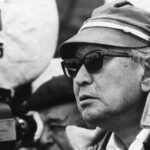
September 26, 1986 | For moviegoers who associate Akira Kurosawa only with the teeming majesty of Ran and Kagemusha, or the kinetic adventure of The Hidden Fortress and Seven Samurai, High and Low will come as something of a shock.
Recently reissued in freshly restored, newly subtitled black-and-white prints, High and Low is Kurosawa’s 1963 version of King’s Ransom, Ed McBain’s 87th Precinct thriller about the kidnapping of a Manhattan businessman’s young son. Kurosawa transposed the story to modern-day Japan, and infused it with his vision of a contemporary society undermined by the erosion of traditional values.
But even while it can be appreciated as an absorbing morality play, in the same vein as Kurosawa’s historical dramas of samurai and noblemen, High and Low can also be enjoyed as a top-notch police procedural. Quite simply, the movie offers audiences the best of both worlds.
Toshiro Mifune, the samurai warrior of Kurosawa’s Yojimbo and Sanjuro, is perfectly cast as Kingo Gondo, a proud lion whose expensive den is a luxury mansion high on a bluff in Yokohama. Gondo is head of production for National Shoes, a company famed for its quality merchandise. Other executives on the board of directors want to produce cheaper shoes for higher profits, but Gondo will hear nothing of their plans. Rather than sit back and watch his beloved company produce shoddy goods, Gondo launches an audacious scheme: He will mortgage everything he owns, and purchase a controlling share of National Shoes.
But before he can complete his risky stock deal, Gondo receives a phone call from a stranger who claims to have kidnapped Gondo’s only son. The businessman is terrified, and agrees to pay a ransom that will result in his financial ruin.
And then Gondo’s son casually walks back into the living room.
Gondo’s relief is short-lived. The kidnapper quickly realizes he has snatched the son of Gondo’s chauffeur by mistake. But he demands the 30-million-yen ransom anyway. “You’re a fool to pay,” the kidnapper says, cruelly taunting Gondo, “but you will.” Sure enough, despite his vaunting ambition and explosive rage, Gondo ultimately is too honorable a man not to prevent the death of his employee’s son.
For the first hour or so, as Gondo repeatedly wrestles with his conscience each time the kidnapper calls, High and Low remains fixed inside the businessman’s lavish home. But the film doesn’t seem static at all. Kurosawa intensifies the tension by skillfully evoking a mounting sense of claustrophobia. Quite often, the action is choreographed like the movements and groupings in a stage play, to great visual effect. Some individual wide-screen shots are framed so that other characters — policemen, the anxious chauffeur, Gondo’s loyal wife — circle Gondo, yet permit him to remain apart in the terrible isolation of his moral dilemma.
Once Gondo leaves his mansion, High and Low smoothly switches gears and becomes a gripping, documentary-style account of a police investigation. The businessman pays the ransom by tossing yen-stuffed satchels from a speeding bullet train —and the police, led by the dynamic Detective Tokura, begin their manhunt in earnest. Tokura doggedly follows a trail of clues that leads from the secluded comfort of the Gondo’s home to the lower depths of a Yokohama slum, eventually linking the ransom demands to an embittered and impoverished medical student.
Kurosawa keeps his audience enthralled during every minute of High and Low, a first-rate thriller that should please both devotees of classic Japanese cinema and faithful viewers of Crime Story and Miami Vice. Better still, Mifune’s authoritative performance gives this entertaining film an edge of moral gravity.
Among the excellent supporting players, two actors are worthy of special mention. Tatsuya Nakadai, who recently starred as the King Lear figure in Kurosawa’s Ran, makes a strong impression as Tokura, suggesting a single-minded intensity even as he expresses compassion for Gondo. As Ginjiro Takeuchi, the kidnapper, Tsutomu Yamazaki remains an enigma until the final scene, when he vividly conveys an entire lifetime of seething rage and envy.
Takeuchi made a conscious choice to commit evil, he announces, because he felt he was already living in hell. In the end, nothing — not even death — terrifies him as much as the possibility that he was mistaken.